From a cooperation signing event between Lac Hong University and Tuoi Tre Newspaper, students from the Faculty of Information Technology had the opportunity to bring classroom knowledge into a practical problem: applying NFC technology, Landing Pages, and digital solutions to support organization, communication, and enhance the attendee experience. Behind a single event is the coordination of students from five academic disciplines: Multimedia Communications, E-Commerce, Information Security, Artificial Intelligence, and Information Technology.

On August 18, 2026, Lac Hong University and Tuoi Tre Newspaper signed a cooperation agreement, opening up numerous activities connecting the academic environment with journalism and media agencies. According to information published by Tuoi Tre, the cooperation focuses on admissions communication, organizing seminars, panel discussions, and events, training communication skills, and creating internship and career experience opportunities for students.
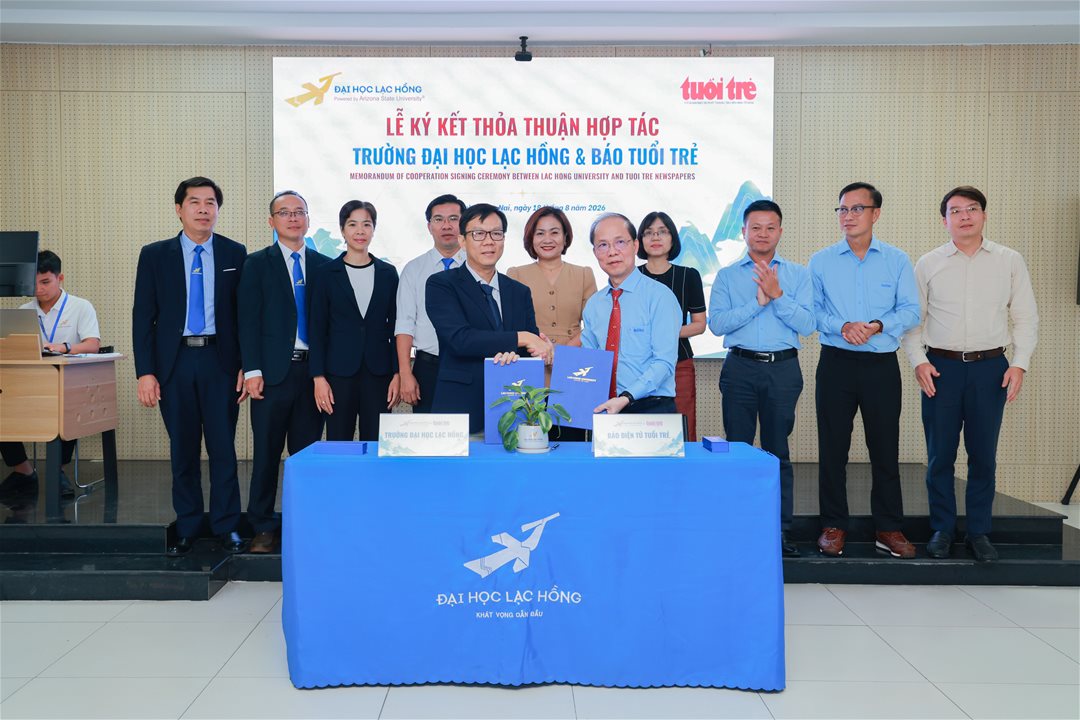
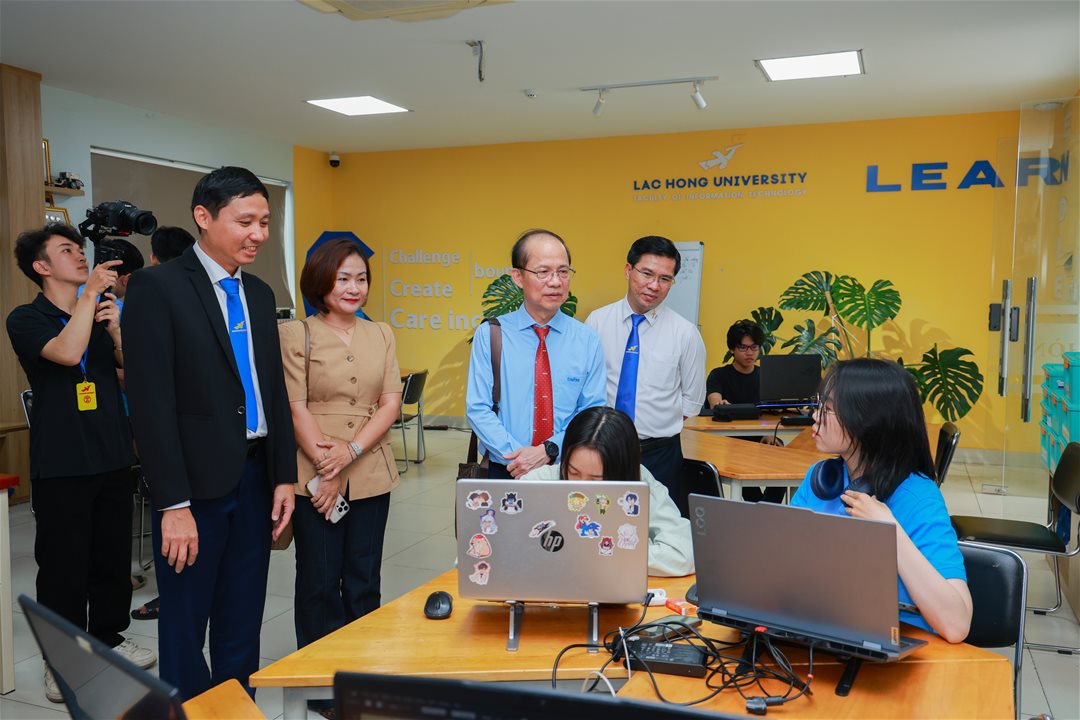
Notably, within the framework of the program, representatives of Tuoi Tre Newspaper visited the laboratory of the Faculty of Information Technology. This space serves as an environment where students engage with technological challenges and product development through hands-on practice.
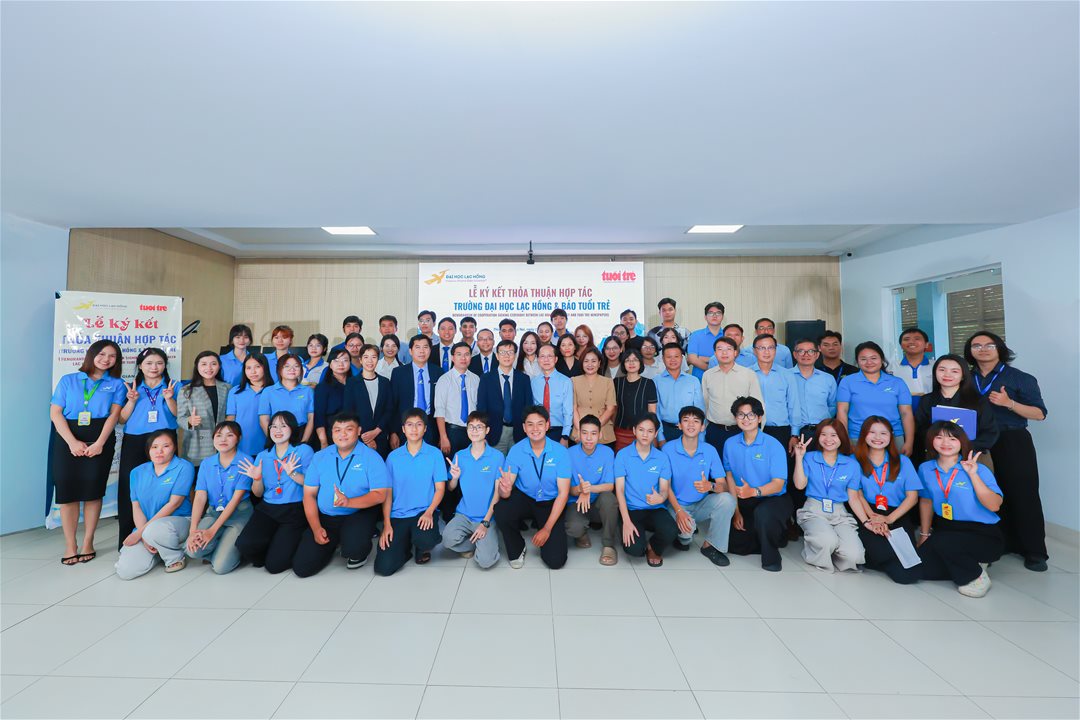
When an Event Becomes a Technological Problem
A cooperation signing event is typically viewed through the lens of its stage, program, guests, and media coverage. However, for students of the Faculty of Information Technology, an event can also be approached as a practical technological challenge.
How can attendees quickly access information? How can event information be centralized onto a single platform? How can technology create a modern experience that remains simple and user-friendly?
From these questions, students can build a Landing Page model combined with NFC specifically tailored for the event.

Instead of searching for links or navigating multiple different posts, attendees can bring their smartphones close to the NFC tag integrated into the organizers' items to access the official event Landing Page.
With a single tap, users can access information regarding the program, time, location, signing content, guests, photos, videos, and related details. Thus, NFC is not merely a short-range wireless connectivity technology. In this context, NFC becomes a touchpoint connecting technology, communication, and user experience.
One Event, Five Disciplines Shaping a Product
The distinctive feature of this model lies in the fact that a technological product does not necessarily have to be created by a single discipline. At the Faculty of Information Technology, students from five majors—Multimedia Communications, E-Commerce, Information Security, Artificial Intelligence, and Information Technology—can collaborate on a shared problem.
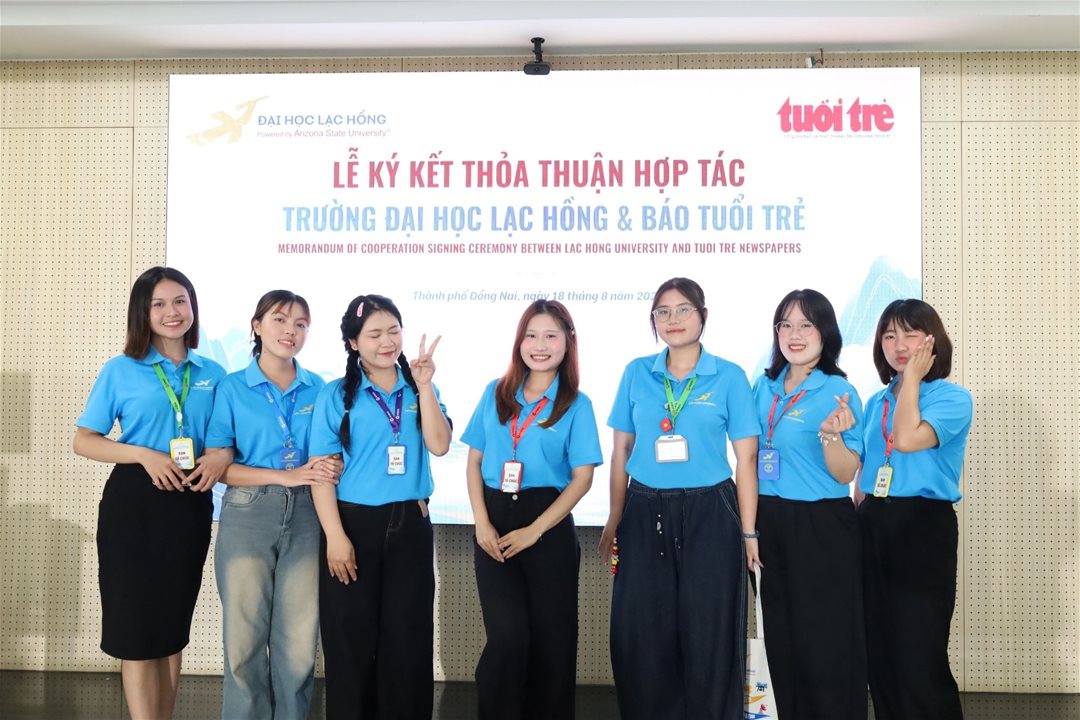
Multimedia Communications students focus on storytelling, imagery, video, content design, and the event's communication experience. This team helps answer the question: what does the public need to see, hear, and how should they experience information? E-Commerce students approach the problem from the perspectives of digital platforms, user journeys, interfaces, and online interaction methods. Concepts of customer experience and digital systems can be translated into designing the attendee journey. Information Technology students handle system architecture, website development, Landing Page creation, and the integration of technological components to ensure the solution operates effectively in practice. Information Security students address data security, access permissions, system safety, and potential risks when utilizing digital platforms for events. Meanwhile, Artificial Intelligence students can expand the system through AI solutions that support content processing, data analysis, experience personalization, or post-event feedback aggregation.
Each discipline assumes a different role, yet the final product constitutes a unified system. This illustrates how a practical challenge can connect the knowledge of multiple technology domains within a single educational environment.
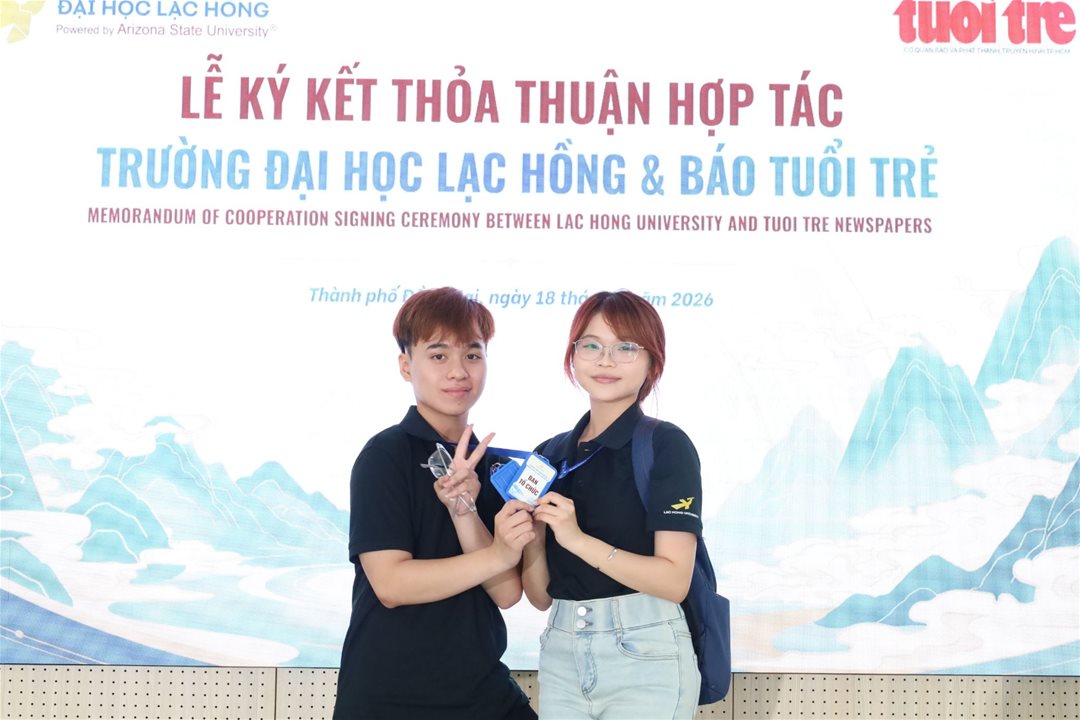
From the NFC Tag to the Digital Event Ecosystem
An NFC tag may be as small as the palm of a hand, but behind it lies an entire product development lifecycle. Students begin by identifying event requirements, researching users, and ideating concepts. From there, the team designs the Landing Page, develops the system, integrates NFC, tests device compatibility, and deploys the product into practical use.
With further development, the system can scale from NFC access to event registration, check-in, material distribution, satisfaction surveys, and attendee data analytics. At that point, technology no longer serves merely as "technical support." Technology becomes an integral part of the entire event experience journey.
This also marks the increasingly evident intersection between Information Technology and communications. Media professionals craft content and stories; technologists build the platforms that enable those stories to be transmitted, interacted with, and measured for effectiveness.

AI Expands the Capabilities of Media and Technology Students
Alongside NFC and Landing Pages, artificial intelligence opens up new possibilities in event organization and communication. Prior to the event, AI can assist with topic research, content ideation, and developing tailored messaging variations for different platforms. During the event, AI tools can support processing images, videos, audio, subtitles, or synthesizing information.
Following the event, data derived from Landing Pages, surveys, and attendee interactions can serve as analytical inputs, helping organizers evaluate program effectiveness and improve future events. Nevertheless, technology does not replace the human role. The true value of AI emerges only when students know how to define problems, select appropriate tools, verify results, and take responsibility for the products they create.
Learning Technology Through Real-World Events
The signing event between Lac Hong University and Tuoi Tre Newspaper exemplifies how the academic environment can serve as a space for students to experience practical professional challenges.
According to Tuoi Tre, cooperation between the two sides includes activities related to communication, organizing seminars, workshops, and events, skills training, and providing internship opportunities and professional environment exposure. During the program, students also raised questions regarding career opportunities and the impact of AI on journalism and media.
For students of the Faculty of Information Technology, such events are not merely activities to attend. They function as practical laboratories where students can observe real-world needs, collaborate with other disciplines, and build products that serve actual users.
Instead of studying NFC purely in theory, students can implement NFC in a real event. Instead of merely learning website programming, students can build a Landing Page deployed in actual use. Instead of studying AI abstractly, students can discover ways to apply AI within a specific communication workflow.
This bridges the gap between "knowing technology" and "using technology to solve problems." When these capabilities are interconnected, an event transcends a mere program to attend, becoming an environment for students to learn, work, collaborate, create products, and bring technology into reality. This aligns with the strategic direction pursued by the Faculty of Information Technology: training students not only to use technology, but to create valuable technological solutions for the community and society.
Every event represents a practical challenge. Every challenge offers an opportunity for students to create products. And every product stands as evidence of the capabilities of the IT students. Faculty of Information Technology, Lac Hong University: Learn technology to create value from technology.
Read more: Lac Hong University students learn "Doing Journalism with Tuoi Tre" – Tuoi Tre Online

